
How to Pick Multiple Winners for a Bluesky Giveaway
Not every giveaway has a single prize. Sometimes you have three of the same item, a set of tiered prizes, or you simply want to reward more of your audience to build goodwill. Picking multiple winners on Bluesky is easy once you know how, but there are a few decisions that affect whether the result feels fair and clean or messy and disputable. Drawing several names is not just running the same pick a few times; how you do it matters.
This guide covers everything about multiple-winner draws: why you might want them, how to draw several unique winners at once, how to handle tiered prizes and backups, and how to keep the whole thing fair and verifiable. By the end you will be able to run a multi-winner giveaway that your audience trusts as much as a single-winner one.
Why pick multiple winners
There are a few good reasons to draw more than one winner. The most obvious is tiered prizes, where a grand prize is followed by smaller runner-up prizes, and you need a winner for each. Multiple winners also raise everyone's perceived odds, which can lift participation, since people are more willing to enter when there are several chances to win rather than one.
Drawing extra names is smart even for a single-prize giveaway. A backup winner or two, drawn at the same time as your main winner, saves you from re-running the whole process if your first winner never responds or turns out to be ineligible. And rewarding several people spreads goodwill more widely, which on a community-focused platform like Bluesky can be worth more than concentrating everything on one big prize.
How to draw several unique winners at once
The core rule of a multi-winner draw is that each winner should be a different person. You do not want the same account drawn twice, splitting your prizes awkwardly or leaving you to redraw. A proper picker handles this automatically: you set the number of winners before you draw, and it selects that many unique entries in one pass, so nobody wins twice.
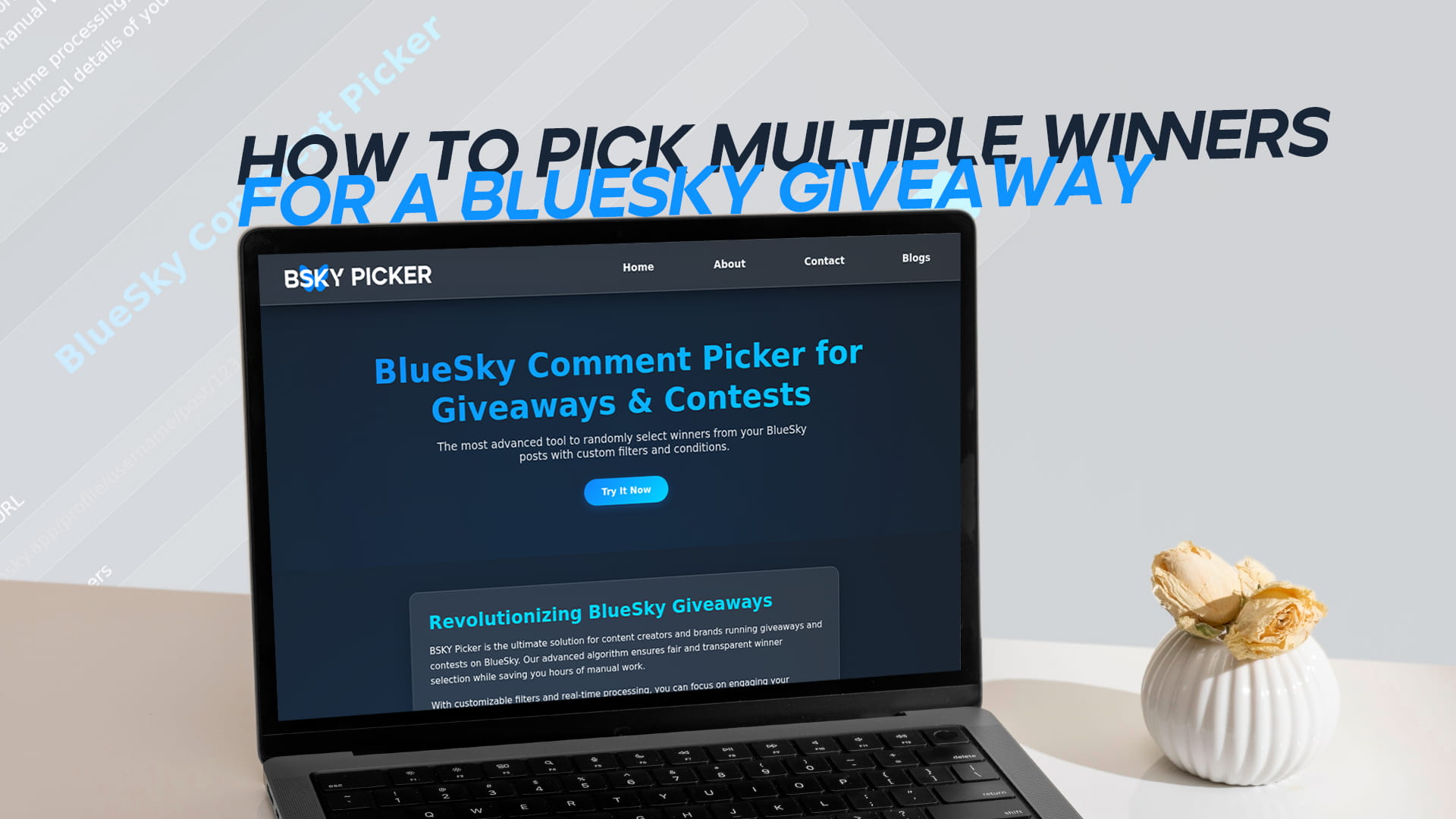
Paste your post link into BSKY Picker, apply your filters and duplicate removal as usual, set the number of winners you want, and draw. The tool selects your winners at random from the qualifying pool, each one distinct, and shows them alongside their entries so you can verify them. Drawing all your winners in a single action is both faster and fairer than running separate draws, because every winner comes from the same pool under the same conditions at the same moment.
Draw all at once, not one at a time
It is worth being deliberate about this. Running one draw, then removing that winner and drawing again, then repeating, can work, but it introduces room for doubt and mistakes. Each separate draw is a chance for something to look inconsistent, and it takes longer. Drawing all your winners together in one pass keeps the process simple and transparent: one draw, one clear result, every winner chosen under identical conditions.
This also makes your announcement cleaner, since you can present all the winners at once rather than dribbling them out. And it removes any suggestion that you kept drawing until you got a result you liked. One pass, the number of winners set in advance, is the most credible way to do it. The mechanics of an even, random draw are covered in this guide to the random comment picker for Bluesky giveaways, and they apply the same whether you are drawing one winner or ten.
Handling tiered prizes
When your prizes differ in value, you need a fair way to decide who gets what. There are two clean approaches, and both work well.
The simplest is to let the draw order set the tiers. Draw all your winners at once, and assign the grand prize to the first name drawn, the second prize to the second, and so on. Since the whole draw is random, the order is random too, so this is completely fair and easy to explain to your audience. The alternative is to run a separate draw for each tier, starting with the grand prize, then removing that winner and drawing the next tier from the remaining pool. This takes a little longer but lets you clearly separate each prize level.
Whichever you choose, decide the method before you draw and state it in your rules, so nobody can argue you assigned the best prize to a favorite after the fact. Announcing which position maps to which prize up front keeps the whole thing above board.
Drawing backup winners
Backups are one of the best reasons to draw extra names, even when you only have one prize. Winners go quiet more often than you would expect, so drawing one or two alternates at the same time as your main winner means you can move straight to a backup if needed, without re-running anything.
Handle it by drawing a few more winners than you have prizes, and noting which are backups and in what order. If a main winner does not claim within the window you set, the first backup steps up, then the second, and so on. State this in your rules, something like "if a winner does not respond within 48 hours, a backup winner will be selected," so moving to a backup is expected and transparent rather than a surprise. Keeping the backup order recorded from the original draw means you never have to improvise later.
Filtering and fairness still apply
Everything that keeps a single-winner draw fair applies to a multi-winner one too, and arguably matters more, since more prizes mean more scrutiny. Turn on duplicate removal so no one account can grab several of your prizes by entering repeatedly. Apply your keyword, hashtag, or mention filters so every winner came from a valid entry that followed the rules. And check each winner's account before announcing, especially with several prizes on the line, to make sure you are not about to hand a prize to a fake account.
Because Bluesky entries are public on the open AT Protocol, every winner you draw can be matched against the live thread, so your whole slate of winners is verifiable, not just one. This guide to a free random comment picker for Bluesky giveaways and contests covers running a clean draw at any scale.
Announcing multiple winners
A multi-winner announcement follows the same principles as a single one, with a little more organization. Post the result as a reply to your original giveaway post, list all the winners with their handles so each gets notified, and say clearly how they were chosen and which prize each is receiving if the prizes differ. Thank everyone who entered, and tell each winner how to claim.
Keeping all the winners in one announcement, on the original post, makes the result easy to verify and easy to celebrate. If you drew backups, you do not need to name them publicly up front; just keep them ready in case a main winner does not respond, and announce any substitution openly when it happens.
How many winners is too many?
There is no hard limit, but a couple of practical considerations apply. More winners means more prizes to fund and more people to contact and deliver to, so scale the number to what you can actually follow through on. A giveaway that promises ten winners and delivers to three does more damage than one that promised three and delivered all three.
As a rough guide, match the number of winners to your goal. A few winners work well for tiered prizes or spreading goodwill. A larger number suits a milestone celebration where the point is broad participation. Whatever you choose, make sure every promised prize actually gets delivered, because follow-through on all winners is what protects your credibility. For a broader look at running the whole process, this guide to the Bluesky giveaway picker for 2026 ties multi-winner draws into the rest of a giveaway.
Keeping it inexpensive
Drawing multiple winners costs no more than drawing one. You get free searches on signup, enough to run a small multi-winner giveaway from entry to announcement, and beyond that a single plan is $5 per month or $50 per year, covering random selection, filters, and duplicate removal for as many winners as you need. The full breakdown is on the pricing page.
A quick multi-winner checklist
Before you run a multi-winner draw, a short run-through keeps it clean:
- Decide the number of winners in advance, and add one or two backups on top.
- Choose how tiered prizes map to the draw, either by draw order or a separate draw per tier, and state it in your rules.
- Turn on duplicate removal so no account can take more than one prize.
- Apply your keyword, hashtag, or mention filters so every winner came from a valid entry.
- Draw all winners in a single pass rather than one at a time.
- Check each winner's account before announcing, especially with several prizes on the line.
- Announce all winners together on the original post, with each prize clearly assigned.
Run through that list, and a multi-winner giveaway stays as tidy and defensible as a single-winner one, with none of the ambiguity that creeps in when winners are drawn piecemeal.
The takeaway
Picking multiple winners for a Bluesky giveaway comes down to a few clean habits. Set the number of winners before you draw, and draw them all at once so each is unique and chosen under identical conditions. Decide how tiered prizes map to draw positions in advance, and state it in your rules. Draw a backup or two so a no-show never derails you. Keep duplicate removal and filters on so every winner is valid, check each winner before announcing, and present them all together on the original post. Do that and a multi-winner giveaway is just as fair, transparent, and credible as a single-winner one, with more of your audience rewarded.
Frequently Asked Questions
Paste your giveaway post link into a picker like BSKY Picker, apply your filters and duplicate removal, set the number of winners you want, and draw. The tool selects that many unique winners in one pass, so nobody is drawn twice.
Draw them all at once. A single pass with the number set in advance is faster, keeps every winner under identical conditions, and removes any suggestion that you kept drawing until you liked the result.
Either map prizes to draw order, giving the grand prize to the first name drawn and so on, or run a separate draw for each tier. Decide the method before drawing and state it in your rules so the assignment is clearly fair.
No, if you use duplicate removal and draw unique winners, each winner is a different account. This prevents one person from taking several prizes and keeps the giveaway feeling fair to everyone.
Yes. Drawing one or two backups at the same time as your main winners means you can move straight to an alternate if someone does not respond, without re-running the draw. State the backup rule in your giveaway so any substitution is transparent.