
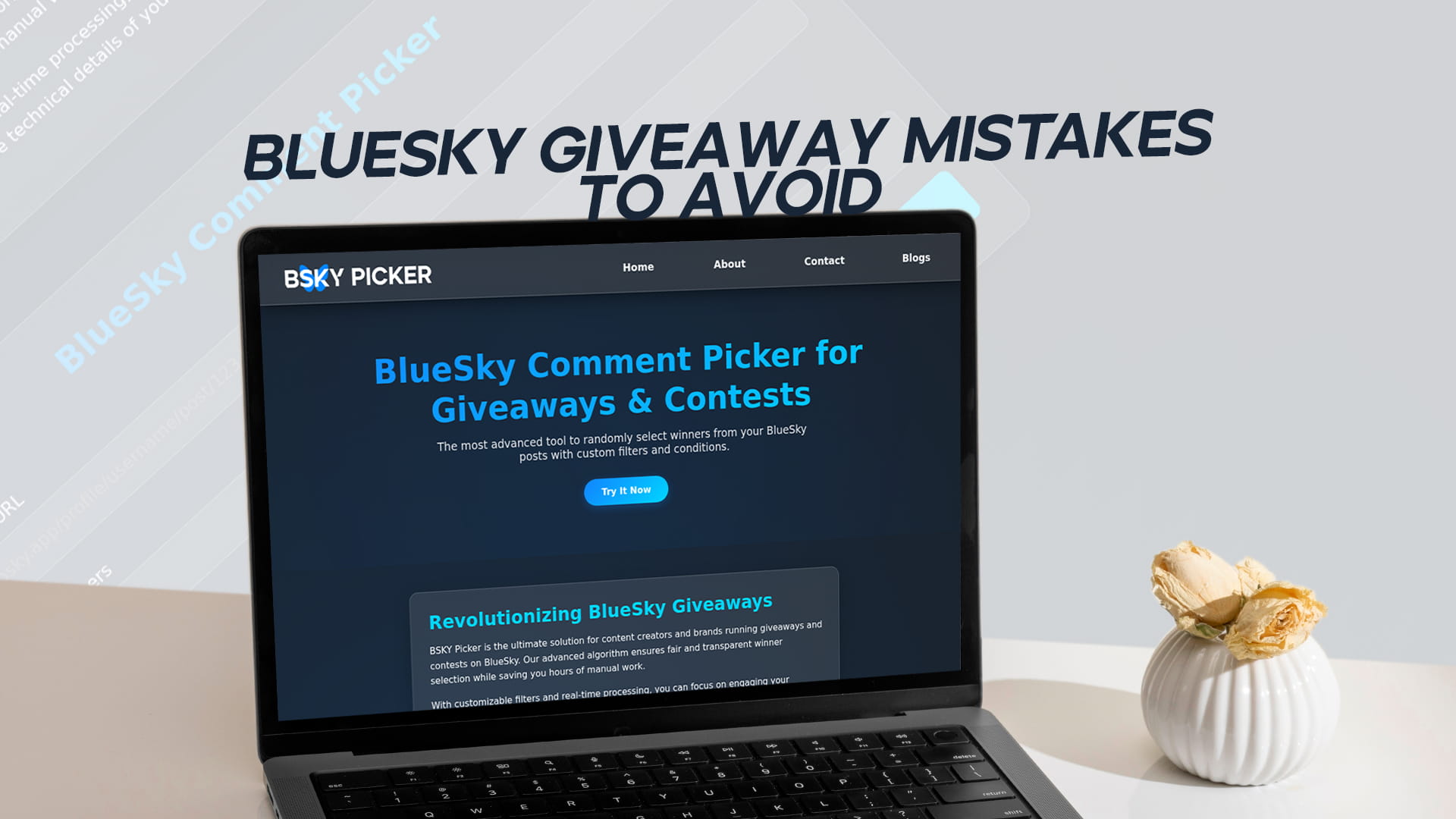
Bluesky Giveaway Mistakes to Avoid
A giveaway is one of the easiest ways to grow on Bluesky, and one of the easiest to get wrong. Most failed giveaways are not failures of generosity or bad luck; they are small, avoidable mistakes in how the contest was set up, drawn, or announced. A confusing rule here, a hand-picked winner there, and a promotion that should have built trust ends up costing it instead.
The good news is that the same mistakes come up again and again, which means they are easy to learn and easy to dodge. Below are the most common Bluesky giveaway mistakes, grouped by where they happen, from planning the post through to handing over the prize, along with how to avoid each one.
1. Posting vague or incomplete rules
The fastest way to start an argument is to run a giveaway nobody fully understands. If your post does not say who can enter, how to enter, when it ends, and how the winner is chosen, you are inviting confusion and disputes. People will enter the wrong way, ask the same questions over and over, and doubt the result when it comes.
Avoid it by writing the essentials into the post itself. State the entry method in one clear sentence, name the prize, give the deadline, and say the winner will be drawn at random. You do not need a wall of legal text for a small giveaway, but the basics have to be visible before anyone enters, not invented afterward.
2. Not setting a clear deadline with a time zone
"This week" and "soon" are not deadlines. Without a firm end time, people do not know when to enter, latecomers feel cheated, and you have no clean moment to draw. Worse, a vague deadline lets anyone accuse you of closing entries whenever suits you.
Avoid it by giving a specific date and time, with a time zone attached. "Ends Friday at 8pm ET" leaves no room for argument. Bluesky has a genuinely global audience, so the time zone matters more than you might think; a deadline with no zone is ambiguous to half the people reading it. Pin the post for the duration so the deadline stays easy to find.
3. Making entry too complicated
Every extra hoop you add costs you entries. Asking people to follow, repost, reply, tag three friends, and answer a question feels thorough, but most people will see the list and scroll on. Complicated rules also create gray areas about who actually qualified, which makes the draw harder and more disputable.
Avoid it by keeping entry to one or two simple actions. A single clear instruction like "reply with your favorite track" gets far more participation than a checklist. If you want a second action for reach, make it optional rather than required. The simpler the entry, the bigger and cleaner your pool of valid entries.
4. Choosing the wrong entry type for your goal
Replies, reposts, and likes each do something different, and picking the wrong one means your giveaway works against what you actually wanted. Running a like-to-enter draw when you wanted real engagement leaves you with a big, shallow pool. Running a reply-only contest when you wanted reach keeps the whole thing trapped on your own post.
Avoid it by matching the entry type to your goal. Use replies for engagement and a verifiable winner, reposts for spreading the post to new audiences, and likes for casual, high-volume participation. If you are unsure which fits, this breakdown of the Bluesky comment picker for giveaways explains how each entry type behaves and when to use it.
5. Offering a prize your audience does not actually want
A giveaway is only as good as its prize, and a generic or off-target prize pulls the wrong crowd. A high-value gadget unrelated to your niche attracts prize hunters who enter, win, and unfollow the moment it is over, leaving you with worse engagement than before you started.
Avoid it by choosing a prize your specific audience genuinely wants, even if it is smaller. A relevant prize draws relevant entrants, which means the followers you gain are the kind who stick around. The right $20 prize for the right audience beats a generic $200 one that brings in people who never cared about your account in the first place.
6. Ignoring the basics that keep a giveaway legal
A casual giveaway is still a promotion, and a few simple missteps can create real problems. The big ones are requiring a purchase to enter, which can turn a giveaway into a regulated lottery in many places, and hiding a sponsorship instead of disclosing it. Neither is worth the risk for the small benefit it brings.
Avoid it by keeping entry free for everyone and being open about who is behind the prize. If a brand is sponsoring it, say so clearly rather than burying it. Make clear you are running the giveaway, not Bluesky. Running a free, even draw is straightforward, and this guide to a free random comment picker for Bluesky giveaways and contests shows how the no-cost version works. For anything with a valuable prize, a quick legal review is wise.
7. Changing the rules after entries open
This is one of the most damaging mistakes because it directly punishes the people who trusted you first. If you decide halfway through that replies need a hashtag, or you extend the deadline because turnout was low, everyone who already entered under the original rules feels cheated, and rightly so.
Avoid it by locking the rules in the original post and leaving them alone. Think through the entry method and deadline before you publish, not after. If you genuinely have to change something because of an error, say so openly and explain why, rather than quietly editing the terms and hoping nobody notices. Consistency is most of what makes a giveaway feel fair.
8. Hand-picking the winner
Scrolling the replies and choosing "the best one" feels harmless, especially when you tell yourself you are being fair. But the moment you pick a winner yourself, the result reflects your judgment rather than chance, and nobody outside your head can verify it. Even an honest choice looks suspicious, and a choice that happens to land on a friend looks worse.
Avoid it by drawing the winner at random with a tool. Paste your post link into BSKY Picker, let it load the entries, and draw. Because the selection is random and the result shows the winner next to their actual entry, you remove both the bias and the appearance of bias. You did not choose the winner, and you can prove it.
9. Forgetting to remove duplicate entries
Some people reply many times to improve their odds, whether out of enthusiasm or strategy. If you draw without checking, one person who replied twenty times has twenty chances while everyone else has one. That is not fair, and it looks bad the moment anyone notices the winner was a serial replier.
Avoid it by turning on duplicate removal so each participant counts once, no matter how many times they entered. It is one of the easiest settings to overlook in the rush to draw, and one of the most important for a credible result. The mechanics of a clean, equal-odds draw are covered in this guide to the random comment picker for Bluesky giveaways, which is worth a look if you run contests regularly.
10. Not filtering out invalid or bot entries
If your giveaway had a rule, like a required hashtag or a tagged friend, drawing from every reply regardless means people who ignored the rule have the same shot as those who followed it. Worse, a winner could turn out to be a bot or a throwaway account that never reads your posts, which is awkward to announce and pointless for growth.
Avoid it by applying filters before you draw. Keep only the entries that include your required keyword, hashtag, or mention, so the winner can only come from people who actually qualified. On a large thread, this matters even more, since reading thousands of replies by hand is impossible and you are relying on the filter to enforce your own rules.
11. Drawing the winner too early
Bluesky's audience spans the globe, and a post takes time to reach everyone who might want to enter. Drawing an hour after posting, or before your stated deadline, means picking from a fraction of your potential pool and shutting out people in other time zones who never got the chance.
Avoid it by waiting until your stated deadline has actually passed before you draw. Give the post a full cycle so it can travel through feeds and reach people who were asleep when you posted. Drawing on time also keeps you honest: if you said entries close Friday at 8pm, drawing then rather than early is part of running the giveaway you promised.
12. Announcing the winner privately or without proof
You can run a perfectly fair draw and still undermine it with a weak announcement. Posting only a name, sending the result in private, or burying it in an unrelated post asks your audience to simply trust you, and trust is exactly what a public giveaway is supposed to earn rather than assume.
Avoid it by announcing in the open, as a reply to the original giveaway post, where the result sits next to the entries it came from. Tag the winner so they actually get notified, say briefly how they were chosen, and show proof when the prize is valuable, like a screenshot of the draw. On Bluesky this is easy, because the entries are public and anyone can check the winner against the live thread for themselves. A clear public announcement also doubles as advertising for your next giveaway, since people who saw the last one was real are far more likely to enter again.
13. Skipping the backup winner and the follow-through
Winners go quiet more often than you would expect, and a giveaway with no plan for that stalls awkwardly. Just as common is the host who announces a winner and then never confirms the prize was delivered, leaving the whole thing feeling unfinished and a little doubtful.
Avoid it by drawing a backup winner or two during the original pick, and by stating a claim window like "respond within 48 hours or a new winner is drawn." Then close the loop: when the prize ships or arrives, a short follow-up showing it was delivered proves the giveaway went all the way through. That visible follow-through is what convinces people your next giveaway is worth entering.
The mistake underneath all the others
If there is one habit that prevents most of these problems, it is treating a giveaway as a repeatable process rather than a one-off scramble. Hosts who wing it tend to make the same errors every time: unclear rules, a rushed draw, a thin announcement. Hosts who build a simple routine, clear rules in the post, a random documented draw, an open announcement, and a delivered prize, avoid nearly all of these mistakes without thinking about them.
Build that routine once and every giveaway after becomes easy and credible. Running the draws stays inexpensive too: you get free searches when you sign up, and beyond that a single plan is $5 per month or $50 per year, covering the random selection, filtering, and duplicate removal that keep a giveaway clean. The full breakdown is on the pricing page. Avoid the mistakes above, keep the process consistent, and your giveaways will grow your following instead of quietly chipping away at it.